Understanding Actions During a Sinking Vehicle Emergency
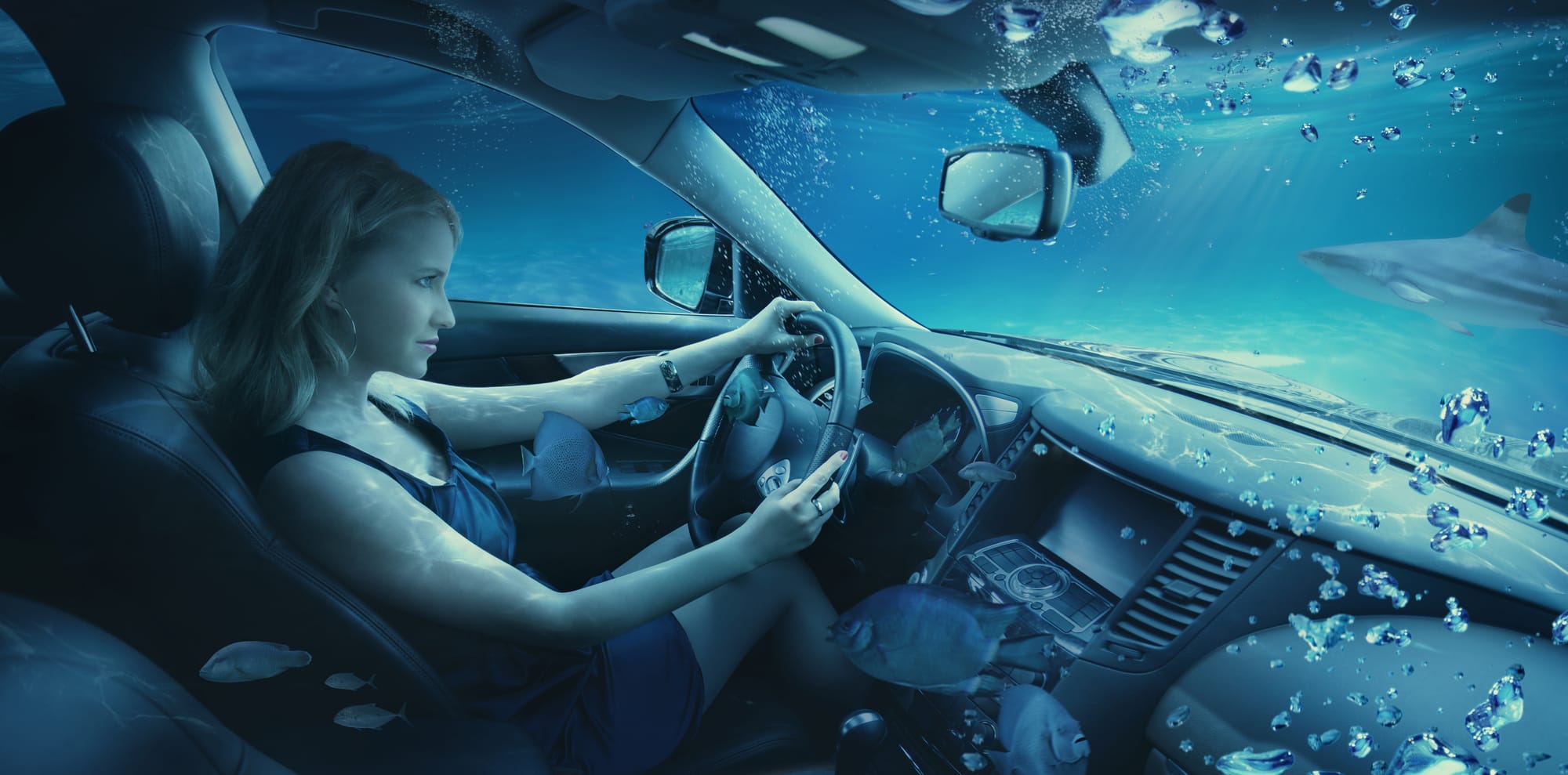
Understanding What to Do in Sinking Vehicle Scenarios, A Practical List of Tips from Muddy Waters Search & Recovery
Sinking vehicle incidents are rare, but when they happen the timeline is unforgiving. A car can float briefly, then lose buoyancy as water enters through openings and pressure equalizes. Panic and unclear priorities cause delays that cost lives. The goal is to replace fear with a simple plan you can execute under stress, with steps that work for most common situations, including crashes into ponds, canals, rivers, marinas, flooded roadways, and boat ramps.
1) Know the real danger timeline, and act immediately
Assume you have seconds, not minutes. Some vehicles float for a short time, others start sinking quickly, especially if they enter nose first, roll, or land in deep water. Do not wait to see if it will stop, do not call anyone first, and do not search for belongings.
Water pressure is your enemy. The deeper the vehicle sinks, the harder it becomes to open doors. Early action while the car is still high in the water gives you the best chance to exit.
Cold shock is real. In cold water, your breathing may become rapid and uncontrolled. This can make you feel like you cannot think. Force yourself to slow your breathing and follow a rehearsed order of actions.
2) Use a simple exit plan, Seatbelts off, Children first, Out the window
Unbuckle immediately. Take off your seatbelt as soon as you realize you are in water. Do not wait until the vehicle stops moving. If your belt is jammed, try pressing your body back into the seat to reduce tension, then release.
Get children out first, but in a controlled order. Unbuckle yourself first so you can move. Then release children from oldest to youngest if you have multiple, since older kids can follow directions and move independently. If a child is in a rear facing seat, prioritize releasing the harness, not removing the whole seat.
Windows are the primary exit. Doors can be impossible to open once water rises. Plan to exit through a window whenever possible.
3) Understand why windows beat doors in a sinking car
Pressure makes doors stick. When water is outside and the cabin still has air, the door is pinned shut. People waste critical time pulling on the handle.
Windows can be opened early. If power windows still work, use them immediately. They often function for a brief period, even after water contact, depending on the vehicle and electrical design.
Once the window is open, the exit is simple. You can climb out even while the car is still floating. This is the safest outcome.
4) Open the window immediately, do not “wait for it to fill”
Open before the window line goes underwater. If you can open the window while it is still above the surface, you avoid fighting water pressure and you can breathe while exiting.
If the window is already underwater, still try. Some windows will still open. Push the switch and keep it pressed. If it moves even slightly, continue until you have enough space to get out.
Do not waste time with small cracks. A window cracked an inch is not enough for escape. Either open it fully, or move to breaking it.
5) If power windows fail, break the side window correctly
Target the side window, not the windshield. Windshields are laminated and designed to resist shattering. Side windows are usually tempered and will break into small pieces.
Hit the corner, not the center. The edges and corners of tempered glass are weaker. Aim for a lower corner if possible.
Use the right tool if you have it. A spring loaded center punch style tool or a dedicated window breaker is effective. Keep it within reach, not in the glove box, not in the trunk, and not buried in a purse.
If you have no tool, improvise. A metal headrest post from a removable headrest can work on some vehicles. Remove the headrest and strike the window edge with a post tip. Do not count on shoes, fists, or phones, those often fail and can cause injuries.
Clear the opening fast. Sweep glass fragments away with the back of your forearm, protect your eyes with a turned face, and exit immediately.
6) Manage seatbelts under stress, prevent tangles and traps
Do not let the belt re lock you. Once unbuckled, push the belt away so it does not wrap around an arm or a child.
Know where the buckle is by feel. Practice locating the buckle without looking, especially if you drive at night or in rural areas with canals, ponds, or flooding.
If it will not release, cut it. A belt cutter on a rescue tool can slice webbing quickly. Pull the belt tight to create tension, then cut away from your body.
7) Help children and passengers without sacrificing your own exit
Stay unbuckled so you can move. If you remain belted, you are pinned in place and cannot assist others effectively.
Give clear one line commands. “Unbuckle now.” “Follow me out the window.” “Hold my shoulder.” Avoid long explanations.
Pass infants out first if possible. If the window is open and you can reach the outside, hand the infant through to a bystander. If no one is there, keep the infant close and exit with them, maintaining one hand on the child at all times.
If a child panics, anchor them. Hold their clothing at the shoulder or under the arm so they cannot drift away during the exit.
8) Do not call 911 before you start escaping
Escape first, call second. A phone call can steal the only workable window you have. If another passenger can call while you work on exit, that can help, but do not delegate the exit to someone inexperienced.
Once out, call and give precise location clues. Bridges, mile markers, cross streets, canal names, boat ramps, or GPS coordinates help responders. If you see downstream hazards, mention current speed and direction.
Tell the dispatcher whether anyone is still inside. This shapes rescue priorities immediately.
9) Avoid common myths that get people hurt
Myth, wait until the car fills with water, then open a door. In theory, equal pressure can allow a door to open, but in practice people drown waiting, lose orientation, or are injured by debris. Windows remain the better option whenever possible.
Myth, you can kick a window out easily. Tempered glass can be tough, and underwater leverage is reduced. Kicking also costs time and can injure your foot. Use a breaker if possible.
Myth, headrests always remove and always break windows. Some headrests lock in place or have short posts. Know your vehicle. Test removal on dry land.
10) Recognize the moment you cannot open a window, and switch tactics fast
Give each attempt a short limit. If the window will not move within a couple of seconds, move to breaking the glass or moving to another window.
Try multiple windows. The nearest window might be jammed against a bank, guardrail, or submerged debris. A rear window or opposite side window may be free.
Move away from inflow if possible. Water may pour in from a damaged area, creating a strong current that complicates your route. Choose the clearest opening.
11) If the vehicle is upside down, orient yourself by touch
Stay calm and create a reference. Put one hand on the roof or door frame so you know where you are. Your sense of up and down will be unreliable.
Find the window with the other hand. Trace along the door panel to locate the window edge and handle area. Work the window switch or breaker from there.
Expect loose items to float. Bags, bottles, and equipment may drift into your face. Keep your mouth closed and focus on your handholds.
12) If you are in moving water, current changes everything
Exit and move to safety quickly. In rivers or canals with flow, the vehicle can be pushed, rolled, or pinned against objects. The longer you wait, the more unpredictable it becomes.
Swim at an angle to shore. Do not fight straight against the current. Angle toward the nearest safe bank or structure you can hold.
Avoid standing in fast water. If the water is moving quickly, your feet can get trapped. Focus on floating and using controlled strokes to reach the edge.
13) If you cannot escape before submersion, use the best possible last resort sequence
Keep your seatbelt on until the last workable moment only if you are being tossed. If the vehicle is still moving or tumbling, a belt can prevent injury. Once the car stops and you can orient, release it immediately. Most scenarios favor unbuckling early, but rollover entry can be an exception.
Take a breath when you can. If you have an air pocket, inhale slowly, do not hyperventilate. Plan one decisive push to the window opening.
Use both hands to pull yourself out. After glass breaks or a window opens, hook an arm through the frame and pull, legs will follow.
Follow bubbles if disoriented. Exhaled bubbles rise, and can help you find the direction to the surface once you are out of the vehicle.
14) After exit, create distance from the vehicle
Move away in case it shifts or sinks suddenly. A vehicle can roll, drop, or pull you under with turbulence. Put several body lengths between you and the car.
Beware of entanglement. Straps, cords, seatbelts, child seat tethers, and floating debris can snag. Keep your movements smooth and deliberate.
Choose a stable exit point. Muddy banks, riprap rocks, docks, and culverts each present different hazards. Head for the safest reachable spot, not necessarily the closest.
15) Treat injuries and cold exposure immediately once you are out
Check for bleeding and breathing issues. Impact injuries can be masked by adrenaline. Do a quick scan of yourself and passengers.
Get out of wet clothes if possible. Hypothermia can start early, even in cool, not freezing conditions. Replace with dry layers, blankets, or coats.
Keep children warm first. Kids lose heat faster. Cover the head and torso. Do not assume they are fine because they are quiet, quiet can indicate cold stress.
16) If someone is still trapped, know what you can and cannot do safely
Do not re enter blindly. Re entering a sinking vehicle is extremely dangerous. If you cannot see an open window or a clear route, you may become the next victim.
Use reaching and throwing before swimming. If they are at a window or partially out, offer a hand, a branch, a strap, or a piece of clothing. Stay anchored on shore if you can.
If you must enter, take one breath, one attempt. Only attempt a brief, planned move, such as pushing a child toward a window opening. Exit immediately after. Multiple dives without training can end in exhaustion and drowning.
Call for professional help quickly. Trained water rescue teams and recovery divers have equipment, tethers, and procedures that reduce risk.
17) Prep your vehicle now, so you are not improvising later
Carry a proven escape tool within reach. A combination belt cutter and window breaker mounted on the driver side, center console, or visor area is best. A tool in a glove box can be unreachable if the car is submerged or you are upside down.
Keep windows and locks maintained. Sticky window regulators and weak batteries reduce escape options. Fix slow windows.
Minimize loose items. Heavy objects can become projectiles in the initial impact, and small objects can obstruct your face in the water.
Teach frequent passengers. Family members should know, unbuckle, open window, out. Practice in the driveway, including where the tool is mounted.
18) Special situations, hybrids, EVs, and submerged electrical concerns
Do not waste time worrying about immediate electrocution. Modern vehicles have safety systems, and the bigger threat is drowning. Focus on rapid exit.
Expect silent failure modes. In some crashes the 12V system may cut out, disabling power windows. That is another reason to carry a mechanical glass breaker.
After escape, do not touch damaged cables in the water. Once you are safe, keep others away and wait for responders to secure the scene.
19) Flooded roadway scenarios, do not enter water you cannot judge
Prevention is the best rescue. If you see water over the road, turn around. Depth and current are hard to estimate, and pavement may be washed out.
Moving water can sweep vehicles easily. Even shallow fast water can push a car sideways into deeper areas. If the vehicle starts to float, your traction is nearly gone.
Crack a window early if you must drive through water. If you realize too late that water is rising, opening a window before the electronics fail can give you an immediate exit route. If conditions worsen, stop trying to drive and switch to escape mode.
20) Boat ramps, marinas, and canal edges, the hidden high risk locations
Low speed errors sink cars too. Many sinking incidents happen during backing a trailer, parking near an edge, or misjudging a ramp. Because the impact may be mild, people hesitate and waste time.
Keep your window behavior consistent. If you back down ramps frequently, make a habit of keeping a front window partially open until the vehicle is secured and in park, especially if you are alone.
Do not unhook yourself from reality. Alcohol, distraction, and fatigue increase these incidents. A simple checklist for launching and retrieval reduces risk.
21) What bystanders should do, fast, safe, and useful actions
Call 911 immediately and keep eyes on the vehicle. Provide exact location, number of occupants seen, and whether anyone exited. Keep updating as the situation changes.
Throw flotation, not yourself. Toss a life ring, cooler, spare tire, or anything that floats. Encourage the person to hold it while getting to shore.
Use a tether if you enter. If you decide to go in, have someone hold onto you with a rope, strap, or connected clothing. Many double drownings happen when an untrained rescuer enters without a plan.
Offer a window breaker if you have one. A small tool can make the difference. Shout clear instructions, “Unbuckle, open window, climb out.”
22) After the incident, mental recovery and reporting details matter
Expect stress reactions. Shaking, nausea, confusion, and delayed tears are normal after a near drowning. Seek medical evaluation even if you think you are fine.
Watch for secondary drowning symptoms. If anyone inhaled water, monitor for coughing, chest pain, unusual fatigue, or breathing trouble, and seek care immediately.
Document key facts once safe. Location, time, water conditions, and who was in the vehicle can help responders, insurance, and recovery teams.
23) A quick drill you can practice in 60 seconds, so you remember under stress
Step 1, point to your escape tool. Every driver and frequent passenger should know where it is without looking.
Step 2, mime unbuckling. Practice the motion, including how you would free a child buckle.
Step 3, choose the window you will use first. Driver window is common, but think about obstacles. If you are beside a canal wall, you may need the opposite window.
Step 4, designate responsibility. Example, driver opens window and exits first, then assists child. Front passenger unbuckles and opens their window. Rear passengers do not wait for instructions, they unbuckle and move toward the nearest open window.
24) Key takeaways to remember when everything goes wrong
Time is the currency. Use it on escape, not on calling, grabbing items, or fighting doors.
Windows are your best exit. Open them immediately, break them if you must, and aim for side glass corners.
Unbuckle first, then help others. You cannot assist if you are trapped by your own belt.
Get clear of the vehicle after exiting. Sinking, rolling, or current can pull you back in.
Prepare now. A properly placed window breaker and a rehearsed plan turn a chaotic event into a survivable one.
25) When recovery becomes necessary, why professional search and recovery matters
Submerged vehicles create hazards. Poor visibility, entanglement, sharp metal, unstable silt, and water movement make underwater work dangerous for untrained people.
Stability and evidence preservation. Professional recovery can stabilize the vehicle, reduce environmental impact, and document conditions for investigations or insurance needs.
Community safety. Removing submerged vehicles reduces long term risks to boaters, swimmers, and wildlife. It also prevents secondary incidents where another car slips into the same hazard.
At Muddy Waters Search & Recovery, we have seen how quickly a routine drive can turn into a water emergency. The most important lesson is that survival is usually decided before the vehicle fully sinks. If you commit the exit sequence to memory, keep the right tool within reach, and act without hesitation, you greatly increase the odds that everyone makes it out alive.