10 Essential Timeline Questions That Power Missing Person Investigations
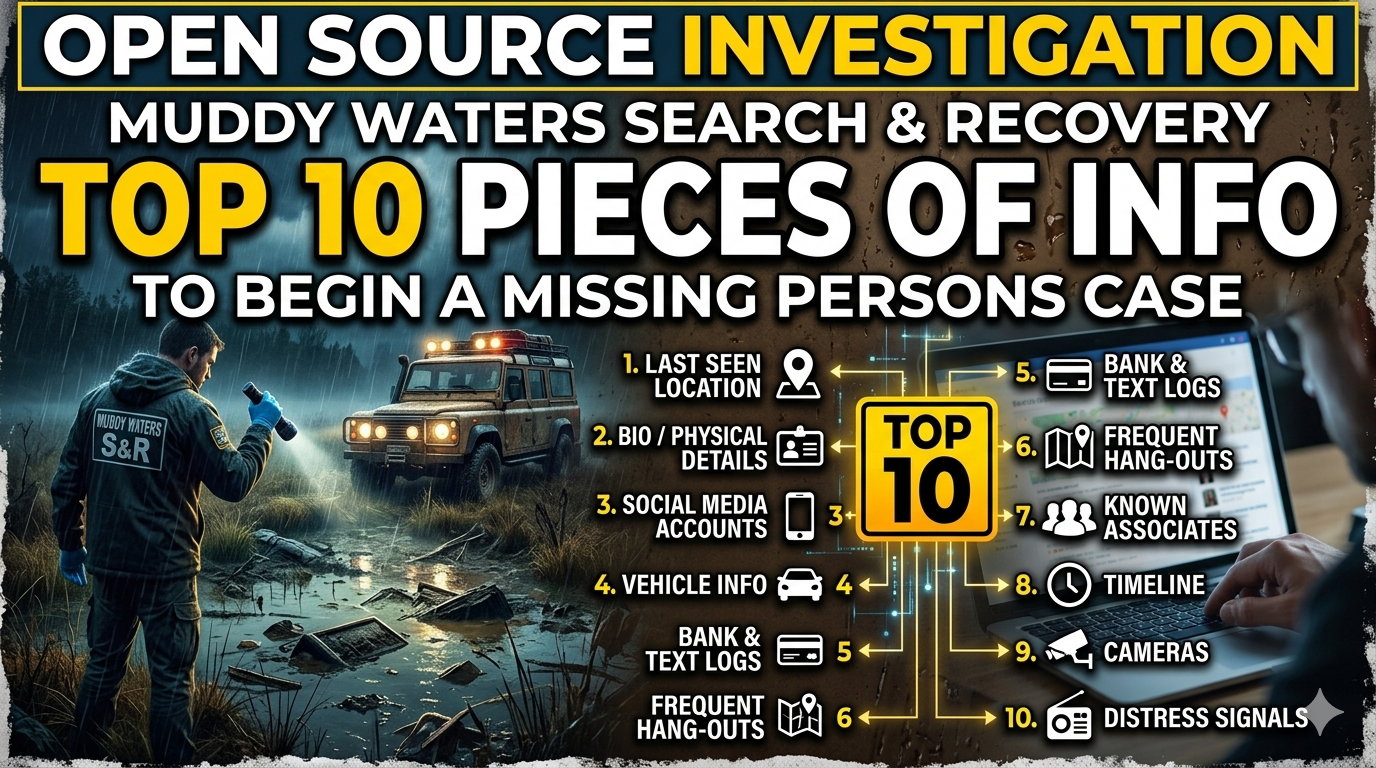
DMCB MEDIA presents a practical, investigator minded guide to one of the most important tools in a missing person investigation, the timeline. When someone disappears, time is not just a number on a clock. Time is evidence. A clear timeline helps search teams choose where to look, helps detectives test stories, helps families remember overlooked details, and helps the public provide better tips.
Many people think the first question is simply, “Where are they?” In reality, the first productive set of questions often sounds like, “When exactly did each event happen, and how do we know?” A timeline is built from small, verifiable time points, then expanded into a sequence that explains movements, communications, decisions, and opportunities for help or harm.
This article breaks down 10 essential timeline questions that power missing person investigations. Each question is designed to produce facts that can be confirmed, narrowed, or disproven. They are also designed to surface gaps, contradictions, and moments where a faster intervention may still be possible. While every case is unique, these questions form a repeatable framework that investigators, families, advocates, and community search coordinators can use to gather information quickly and responsibly.
For each point below, you will find the core question, why it matters, what specific details to collect, and common pitfalls that can distort the timeline. If you are supporting a missing person case, consider writing answers in a single document, with sources for each time statement, such as a screenshot, a call record, a receipt, a witness name, or a camera location.
1. What is the last confirmed time we know they were safe, and what makes it confirmed?
Every strong timeline begins with a last confirmed safe point, sometimes called the anchor point. This is not the last time someone thinks they were okay. It is the last time safety can be supported by evidence. “Confirmed” means there is a reliable, attributable source, such as a direct conversation, a clear video clip, a documented workplace check in, a medical appointment record, or a credible witness who can be identified and re interviewed.
This question matters because nearly every investigative decision depends on it. Search radius estimates, likely travel distance, survival modeling, and suspect opportunity windows all change when the anchor point moves by even thirty minutes.
Details to collect for the last confirmed safe point
- Exact time and time zone, including whether the time is approximate or precise.
- Source type, such as video, phone call, in person sighting, transaction, or device data.
- Source identity, name, contact, relationship, and whether the source is independent.
- Context, what they were doing, mood, clothing, companions, and location specificity.
- Supporting artifacts, screenshots, camera stills, receipts, access logs, or notes.
Common pitfalls
- Using “last seen” as a vague statement with no proof, especially when based on memory alone.
- Confusing a message being delivered with the person personally sending it.
- Failing to note how the time was derived, such as a witness recalling it “around dinner.”
2. What is the last known location, how precise is it, and what is the confidence level?
A timeline is not just time points. It is time plus location. Investigators need to know not only where the person was, but also how tight that location estimate is. “At the mall” is broad. “At the east entrance near the pharmacy doors, visible on camera at 6:12 pm” is actionable. This distinction determines whether searchers focus on a specific building exit, parking row, or route home, versus spreading resources too thin.
This question matters because many early tips involve sightings. If the base location is fuzzy, almost any sighting can sound plausible. When the base location is precise, conflicting tips can be sorted quickly.
Details to collect about last known location
- Address or coordinates, plus nearby landmarks and the direction of travel if known.
- How location was established, such as camera, witness, phone location, or vehicle telematics.
- Precision range, for example within a room, within a building, within a block, or within a few miles.
- Environmental conditions, lighting, weather, traffic, and whether the area has cameras.
- Transportation context, on foot, in a vehicle, rideshare, bus, bike, or with another person.
Common pitfalls
- Overstating precision, treating a broad cell tower area as a pinpoint location.
- Ignoring “negative location” evidence, such as a camera showing they did not exit through a specific door.
- Not recording who provided the location claim, and whether they can be contacted again.
3. What was the planned schedule for that day, and what changed from the plan?
People rarely vanish at random moments. They disappear during a sequence of ordinary plans, deviations, and decisions. Understanding the planned schedule creates a baseline. Deviations from the baseline are where risk often concentrates. A missed ride, an unexpected stop, an argument, a surprise meeting, or a last minute change of route can reveal both opportunity and motive.
This question matters because it helps investigators identify the decision point, the moment when events started to diverge. That decision point often aligns with a key location, a key person, or a key communication that can be traced.
Details to collect about plans and deviations
- Appointments, work shifts, classes, deliveries, childcare pickups, and social plans.
- Expected departure and arrival times, including routine routes and usual stops.
- Who knew the plan, who confirmed it, and how, such as texts or calendar entries.
- Any stated reasons for changes, including “running late,” “meeting someone,” or “need to talk.”
- What did not happen, such as a no show at work, missed practice, or uncollected prescription.
Common pitfalls
- Assuming the plan was followed just because it was discussed earlier.
- Forgetting informal routines, such as a daily coffee stop, gym visit, or dog walk route.
- Not documenting when a family member first realized a plan was off track.
4. Who was the last person to have direct contact with them, and what exactly was said and observed?
The last direct contact is a cornerstone of timeline reconstruction. Direct contact means a two way interaction, in person, voice call, or live video. It is more informative than a one way message, because it can capture tone, coherence, distress signals, and immediate environment cues. It can also identify the last person with confirmed opportunity to influence the next steps.
This question matters because the last contact can reveal whether the person was alone, whether they were being followed, whether they sounded impaired, and whether they mentioned a destination. It also helps investigators prioritize interviews, verify alibis, and locate additional witnesses.
Details to collect about the last contact
- Exact time contact began and ended, plus the method used.
- What the missing person said they were doing, where they were, and where they were going.
- What the other party heard or saw, background sounds, traffic, voices, music, announcements.
- Behavioral indicators, calm, rushed, confused, fearful, angry, euphoric, or unusually quiet.
- Any follow up that was expected, such as “I will call when I get home.”
Common pitfalls
- Letting the last contact report remain vague, without capturing exact quotes or sensory details.
- Assuming a person is truthful without documenting verifiable elements that can be checked.
- Waiting too long to document memories, which can shift after hearing others’ versions.
5. What is the last known digital activity, and can we tie it to the person, the device, and the time?
Modern timelines often hinge on digital traces. Calls, messages, app activity, social media logins, email access, cloud photo uploads, and even smart device interactions can establish time points. But digital evidence must be handled carefully. A phone can be used by someone else. A device can be left behind. An account can be accessed remotely. The key is tying the activity to the person, the device, and the timestamp with a clear chain of reasoning.
This question matters because digital activity can indicate consciousness, movement, planning, or a sudden stop. A sharp end to normal device behavior can mark a critical window. A burst of unusual messages can indicate escalation. A last map search can reveal intended direction.
Details to collect about digital activity
- Last outgoing and incoming calls, with times, numbers, and call duration.
- Last texts or messaging app activity, including content, recipients, and read receipts.
- Last location services updates, if available, and what app produced them.
- Last financial app or card activity, including online purchases and in store transactions.
- Last social media interactions, posts, comments, direct messages, and logins.
Common pitfalls
- Confusing “last seen online” status with confirmed physical safety.
- Misreading timestamps due to time zones, device settings, or delayed message delivery.
- Not preserving evidence, such as failing to screenshot a message thread before it changes.
6. When did they stop behaving normally, and what was the first missed expectation?
Families often notice something is wrong not at the moment of disappearance, but at the moment a routine breaks. This could be a missed pickup, a failure to clock in, not answering a daily call, missing a medication dose, or leaving a pet uncared for. The “first missed expectation” is a vital timeline marker because it frames the earliest reasonable moment that intervention could have started.
This question matters because it separates worry from evidence. It also helps investigators understand whether this is an abrupt event or a gradual withdrawal. A person who has not answered messages for eight hours may be consistent with a long shift. The same silence may be alarming if they always respond within minutes.
Details to collect about normal patterns and breaks
- Regular communication habits, who they talk to daily, and typical response times.
- Work, school, caregiving, and medical adherence routines, including scheduled check ins.
- Vehicle use patterns, typical fuel level habits, and parking routines.
- Responsibilities that are rarely missed, pets, children, medications, and appointments.
- Who noticed the break first, at what time, and what actions they took.
Common pitfalls
- Projecting one person’s expectations onto everyone, instead of using the missing person’s established routine.
- Not writing down early observations, which later become blurred after hours of stress.
- Overlooking subtle breaks, such as a brief, unusual reply that does not match their writing style.
7. What confirmed movements happened between the last safe point and the time they were reported missing?
Between the anchor point and the report time lies the most important and most disputed space in the timeline. Investigators aim to replace assumptions with confirmed movements. Each movement should be treated like a link in a chain, with a source and a timestamp. Even small confirmations, such as a toll transponder ping, a store camera clip, or a witness seeing the person cross a street, can shrink the unknown area dramatically.
This question matters because it turns a broad, stressful “missing window” into smaller segments that can be searched and analyzed. It also helps identify where the person likely was not, which prevents wasted effort.
Details to collect about movements
- Vehicle details, make, model, plate, distinguishing marks, and who typically drives it.
- Routes, including highways, side streets, transit lines, and known shortcuts.
- Camera opportunities, traffic cameras, store cameras, building entry systems, doorbell cameras.
- Receipts and transaction records, including time, store location, and items purchased.
- Witnesses along the route, including rideshare drivers, coworkers, neighbors, and clerks.
Common pitfalls
- Building a timeline from rumors or group chats instead of source verified points.
- Assuming the most direct route, when many people take routine detours.
- Failing to request video quickly, when many systems overwrite within days or even hours.
8. What time sensitive risks were present, and when did each risk become relevant?
Not all missing person cases carry the same urgency indicators, and urgency can change over time. Investigators look for time sensitive risks, such as extreme weather exposure, lack of required medication, cognitive impairment, suicidal statements, domestic violence patterns, stalking history, human trafficking vulnerability, or hazardous terrain. The key is to place each risk on the timeline, not just list it as a general concern.
This question matters because it helps prioritize resources. It informs whether to deploy specialized search teams, issue public alerts, check hospitals and shelters in a specific sequence, or focus on certain associates. It also influences how tips are triaged, which ones need immediate follow up, and which can be logged for later.
Details to collect about risks with time relevance
- Medical needs, prescriptions, dosage schedule, and the time of last confirmed dose.
- Mental health concerns, recent stressors, and any time anchored statements about self harm.
- Weather and exposure factors, temperature, precipitation, daylight, and clothing worn.
- Known threats, restraining orders, stalking incidents, or recent conflicts with timelines.
- Access to resources, money, transportation, safe places, and supportive contacts.
Common pitfalls
- Stating a risk without documenting when it became active, such as “needs insulin,” without the last dose time.
- Assuming risk equals outcome, instead of using it to guide targeted, evidence based action.
- Overlooking environmental time factors, such as tides, snowfall, or heat index changes.
9. What possible sightings or contacts occurred after the disappearance window began, and how do we validate or rule them out?
After a person is reported missing, tips often flood in. Some are helpful, some are mistaken, and some are deliberately false. The timeline question is not “Did someone see them?” It is “When did the sighting occur, how credible is it, and how can it be validated quickly?” A validated sighting can reset the entire timeline and shift searches to a new area. A ruled out sighting prevents misdirection.
This question matters because post disappearance sightings can create false hope or divert resources. Investigators need a structured way to evaluate them using time, location, description accuracy, and independent corroboration.
Details to collect for each reported sighting
- Exact time, duration of observation, and whether the witness is certain or estimating.
- Exact location and direction of travel, including where the witness was positioned.
- Description match, clothing, hair, height, gait, tattoos, scars, bags, and companions.
- Witness credibility factors, distance, lighting, obstructions, stress level, and whether they know the person.
- Corroboration options, nearby cameras, other witnesses, receipts, transit logs, or phone location data.
Common pitfalls
- Accepting a sighting because it is emotionally compelling, instead of verifying details.
- Failing to record the original statement promptly, then losing the initial time estimate.
- Not mapping sightings in sequence, which can reveal impossible travel times or consistent directionality.
10. What is the full timeline of reporting, response, and actions taken, and where were the delays?
Investigators also build a timeline of the investigation itself. When was the person first noticed missing? When was the first call to family made? When was law enforcement notified? When were hospitals checked? When were account passwords changed? When were search teams deployed, cameras requested, and alerts issued? This meta timeline is essential for two reasons. First, it reveals missed opportunities and time lost. Second, it improves ongoing decision making by clarifying what has already been tried and what evidence may have expired.
This question matters because some of the most valuable evidence is time sensitive, including surveillance footage retention, short term location history, rideshare records, and perishable witness memory. A clear response timeline can also help coordinate multiple agencies and volunteer groups without duplication.
Details to collect about reporting and response actions
- Time the concern began, who noticed, and what triggered the concern.
- Times and outcomes of calls to friends, family, workplaces, hospitals, shelters, and jails.
- Time the missing person report was filed, case number, agency contact, and assigned investigator.
- Times evidence was preserved, screenshots taken, video requested, and devices secured.
- Public outreach timeline, flyers posted, social posts published, media contact, and tip line setup.
Common pitfalls
- Not logging actions, which later forces everyone to rely on memory during a stressful period.
- Multiple people making uncoordinated requests for video or records, creating confusion and delays.
- Neglecting to note negative results, such as “hospital A checked at 3:10 pm, no record found.”
How to use these questions to build a working timeline document
A useful timeline is not a story. It is a structured record of time stamped claims with sources. To turn the ten questions into a working document, start a single running list of events, earliest to latest. For each entry, write the time, the event, the location, and the source. If the time is estimated, label it as estimated and note who estimated it and why.
Recommended fields for each timeline entry
- Time and date, including time zone.
- Event description, short and factual.
- Location, as precise as possible.
- Source, witness name, screenshot, camera ID, record type, or document link.
- Confidence level, high, medium, or low, based on verifiability.
- Next step, what should be checked to confirm or refute it.
Why “confidence level” changes everything
In missing person investigations, many conflicts are not about what happened but about how sure we are. A timeline with mixed quality evidence should not treat every item equally. A high confidence camera timestamp should outweigh a low confidence memory. Labeling confidence also makes it easier to revise the timeline without embarrassment or blame, because changes become a normal part of verification.
Practical examples of timeline upgrades
- A witness says, “I saw her around 7.” Upgrade it by checking a receipt, a phone photo timestamp, or a nearby camera that shows the witness location.
- A friend reports a text at 9:14 pm. Upgrade it by capturing screenshots, verifying the phone number, and confirming whether the message was delivered, read, and replied to.
- A bank charge appears at 8:02 pm. Upgrade it by requesting store video, identifying the register, and checking whether the person used their card or if the card could have been taken.
Key reminder, timelines are living tools
As new tips arrive and old assumptions are tested, the timeline will change. That is normal and necessary. The goal is not to be right on the first draft. The goal is to become more accurate fast, with fewer unknowns and fewer wasted steps.
When families and friends answer timeline questions, what helps investigators most?
Investigators and search coordinators can move faster when the family provides information in a way that is easy to verify. The most helpful support is organized, time stamped, and sourced. When you can, avoid long narrative paragraphs that blend multiple time points together. Instead, list each event separately, with the best time you can provide and a note about how you know.
High value items families can gather quickly
- Recent photos that show hair length, clothing, and any injuries or marks.
- A list of known associates with phone numbers and the last time each spoke to the missing person.
- Vehicle information, typical routes, and any in car systems that track location.
- Phone carrier, device model, and whether location sharing was enabled with anyone.
- Locations that matter, home, workplace, favorite spots, recent conflicts, and places of comfort.
What to avoid when building a timeline publicly
Public posts can generate tips, but they can also contaminate witness memories or alert a suspect. If you share timeline elements publicly, be careful about releasing precise investigative details, such as exact planned routes, specific evidence sources, or names of witnesses. Coordinate with the assigned investigator whenever possible. Share what helps the public identify the person and report credible sightings, such as appearance, vehicle, last general area, and a tip line.
Bringing it all together
The ten questions in this DMCB MEDIA guide work best as a system. Start with the last confirmed safe time and last known location. Build outward using plans, contacts, digital activity, and confirmed movements. Mark risks with time relevance. Evaluate sightings with validation steps. Finally, document the response timeline so evidence is not lost and effort is not duplicated.
A missing person timeline is one of the few tools that can turn chaos into clarity. Even when answers are incomplete, the act of asking these questions creates structure, highlights what can be confirmed next, and reveals where minutes and hours matter most. If you are working a case, keep the timeline updated, sourced, and shared with the right people. In many investigations, the fastest path to the right place begins with the right time question.