Iran Conflict 2026: Facts, Background, and Worldwide Effects
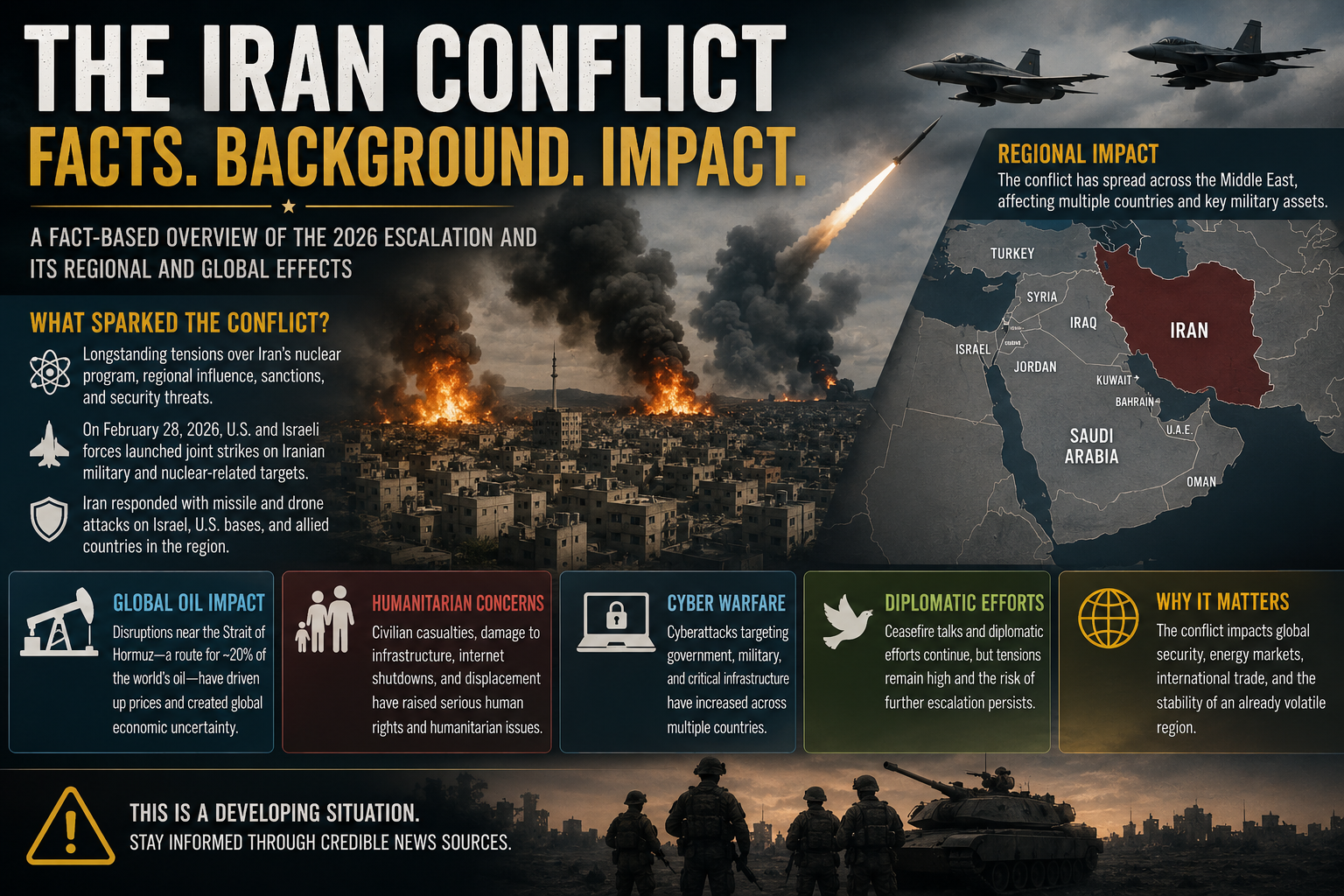
The Iran Conflict: Facts, Background, and Global Impact
The conflict involving Iran, the United States, Israel, and regional allies has become one of the most significant international crises in recent years. As tensions escalated into open military operations in 2026, the effects have spread far beyond the Middle East, impacting civilians, global energy markets, regional security, and international diplomacy. This article provides a factual overview of the conflict, its origins, key developments, and its worldwide impact based on currently available reporting and public information.
Background of the Conflict
Tensions between Iran and the United States have existed for decades, fueled by disagreements over:
- Iran’s nuclear program
- Regional military influence
- Sanctions and economic pressure
- Support for armed proxy groups
- Maritime security in the Persian Gulf
- Relations with Israel and Western allies
Military tensions increased significantly after regional conflicts intensified in the Middle East beginning in 2023 and continued through 2025 and 2026.
Major Escalation in 2026
According to multiple reports, the current phase of the conflict began on February 28, 2026, when joint U.S. and Israeli strikes targeted Iranian military infrastructure, missile systems, air defenses, and leadership facilities. Reports indicate that Iranian Supreme Leader Ali Khamenei and several senior Iranian officials were killed during the initial strikes. Iran responded with missile and drone attacks targeting Israel, U.S. military installations, and allied countries in the region.
Regional Expansion
The conflict quickly expanded across the Middle East.Countries and regions reportedly affected include:
- Israel
- Lebanon
- Iraq
- Syria
- United Arab Emirates
- Saudi Arabia
- Jordan
- Qatar
- Bahrain
- Oman
- Kuwait
Iran-backed groups and regional militias have also reportedly launched attacks connected to the broader conflict.
Strait of Hormuz and Global Oil Concerns
One of the most serious international concerns has been disruption near the Strait of Hormuz, a critical global shipping route through which approximately 20% of the world’s oil supply passes. The conflict has contributed to:
- Rising oil prices
- Increased fuel costs
- Shipping disruptions
- Global market instability
- Inflation concerns in multiple countries
Analysts warn that prolonged instability could continue affecting global energy markets and international trade.
Civilian Impact
The conflict has resulted in civilian casualties, infrastructure damage, and displacement in several areas.Reports also describe:
- Damage to schools and hospitals
- Internet shutdowns inside Iran
- Reduced access to emergency information
- Economic instability
- Humanitarian concerns
International organizations and governments have raised concerns about the safety of civilians and the risk of wider regional escalation.
Cyber Warfare and Information Operations
Cyber operations have reportedly become a major component of the conflict.Experts say cyberattacks have targeted:
- Communications systems
- Government infrastructure
- Financial systems
- Military networks
- Online information systems
Cybersecurity agencies in several countries have warned businesses and governments about increased cyber risks connected to the conflict.
Ceasefire Efforts and Ongoing Tensions
Although ceasefire discussions and negotiations have taken place, tensions remain high.Officials from multiple countries continue diplomatic efforts aimed at:
- Reducing military escalation
- Protecting shipping routes
- Stabilizing oil markets
- Preventing wider regional war
However, military preparations and warnings from both sides suggest the situation remains unstable.
Why This Conflict Matters Globally
The Iran conflict affects more than just the Middle East.Potential global impacts include:
- Higher fuel and transportation costs
- Supply chain disruptions
- Economic instability
- Increased cybersecurity threats
- Military tensions involving multiple nations
- Risks to international trade routes
Because the Middle East plays a major role in global energy production and international security, developments in the conflict are being closely monitored worldwide.
Final Thoughts
The conflict involving Iran, the United States, Israel, and regional actors remains complex and rapidly evolving. Information can change quickly during wartime, and claims from all sides should be carefully verified through credible reporting and official sources.As diplomatic negotiations continue alongside military activity, the international community remains focused on preventing further escalation and protecting civilian lives.