Top 10 Ways Search and Rescue Organizations Support Missing Person Cases
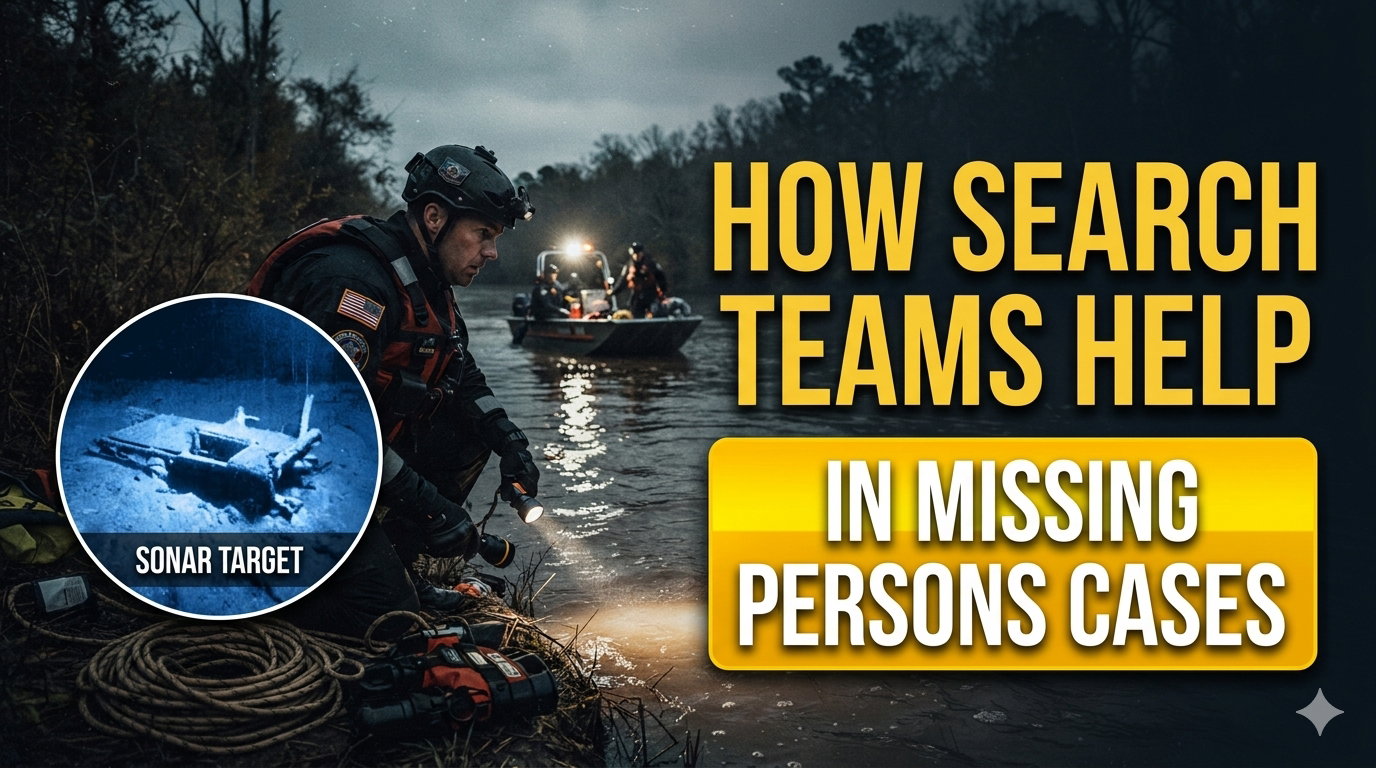
“Search. Support. Truth.” is more than a tagline. It captures what high quality search and rescue teams try to deliver when a person goes missing, timely action, practical support for families, and careful, documented work that helps clarify what happened. Missing person cases are emotionally intense and operationally complex. They can involve wilderness terrain, dense urban areas, water, extreme weather, limited information, and time pressure. They also frequently involve multiple agencies and volunteers who must work safely, legally, and effectively.
This article explains the top 10 ways search and rescue organizations support missing person cases. The focus is on the practical actions that experienced teams take, how those actions reduce risk and increase the chance of a safe outcome, and what families and communities can expect during a response. Every case is different, and no list can capture every scenario. Still, these ten areas represent the core contributions that organized search and rescue groups bring to the table.
Important note: In most jurisdictions, law enforcement leads missing person investigations. Search and rescue organizations often operate in support of law enforcement and incident command. They may be governmental, nonprofit, volunteer based, or mixed. Their value is greatest when they coordinate tightly with the lead agency, follow established protocols, and keep documentation that can be used later.
1) Rapid mobilization and structured incident response
When someone is missing, speed matters, but unstructured activity can waste time, duplicate efforts, and even destroy clues. Search and rescue organizations support cases by turning urgency into organized action. Many teams can mobilize trained personnel quickly and integrate into a formal incident management system. This allows the search to scale up from a small hasty effort to a multi day operation while maintaining safety, accountability, and clear communications.
A structured response typically begins with collecting initial facts, establishing who is in charge, defining objectives, and building a plan for the first operational period. The team also sets up check in procedures, assigns roles, and establishes communications. This structure is not bureaucracy for its own sake. It is how a search remains effective when stress is high and information is incomplete.
- Fast call out: Coordinated paging, phone trees, and dispatch agreements to assemble responders quickly.
- Incident command integration: Ability to operate under unified command with law enforcement, fire, parks, or emergency management.
- Role assignment: Search managers, team leaders, trackers, medical, communications, planning, and logistics.
- Accountability: Knowing who is deployed, where they are assigned, and when they are due to return.
- Operational periods: Clear start and end times for assignments, briefings, debriefings, and plan updates.
This organized mobilization is one of the biggest differences between ad hoc searching and a professional grade operation. It reduces chaos, protects responders, and creates a foundation for the investigative and technical work that follows.
2) Information gathering, subject profiling, and last known point analysis
Before teams step into the field, search and rescue organizations help turn scattered facts into a usable picture of what might have happened. This includes gathering information from family, friends, witnesses, and reporting parties, then translating it into a subject profile. A subject profile describes who the missing person is, what they were doing, what they might do under stress, and how they typically move through terrain or neighborhoods.
One of the most critical early tasks is clarifying the last known point, last known location, and last known time, along with the reliability of each piece of information. A reliable last known point can focus resources sharply. A weak or uncertain last known point may require a broader containment approach and more emphasis on investigative canvassing.
- Subject profile: Age, physical condition, clothing, equipment, experience level, medical issues, medications, cognitive status, and risk factors.
- Behavioral considerations: Likely travel routes, attraction points, avoidance behaviors, and response to calling out.
- Timeline building: Who saw the person, when, what was said, what was observed, and what is confirmed versus rumored.
- Last known point work: Verifying the location, mapping it precisely, and noting terrain, access points, and hazards.
- Clue awareness: Identifying what items would be meaningful clues and what should be left in place for documentation.
This analytical stage supports better decisions about where to deploy resources first. It also helps law enforcement by organizing information in a way that is actionable and that can be revisited when new facts emerge.
3) Search planning, segmentation, and probability based tactics
Search and rescue organizations add value by applying planning methods that improve coverage while minimizing wasted effort. A good search is not just about effort, it is about choosing the right areas, at the right time, with the right methods. Search planners often segment the area into manageable zones and assign resources based on probability of area and probability of detection.
In practical terms, this means combining subject behavior, terrain, time missing, weather, and access routes to predict where the person is most likely to be. Then teams choose tactics that maximize the chance of finding them, whether that is hasty teams on trails, grid searches in high probability zones, technical rope teams for steep terrain, or water operations.
- Defining the search area: Establishing an initial radius and then adapting it using terrain and subject movement patterns.
- Segmenting zones: Breaking large areas into search assignments that can be completed and evaluated.
- Containment planning: Setting up trailheads, road checks, aerial observation, or tracking elements to limit outward movement.
- Resource matching: Using the right tool for the environment, such as mounted teams, ATVs where legal, boats, or technical teams.
- Coverage evaluation: Recording what was searched, how it was searched, and how confident the team is in the result.
Search planning is one of the least visible forms of support, but it often makes the difference between a coordinated operation and a large group of well meaning people searching randomly. It also creates a clear record that helps explain decisions later, especially in difficult outcomes.
4) Field search operations with trained teams and safe methods
The public often thinks of search and rescue as people walking through woods calling a name. In reality, field operations include a range of disciplined techniques designed to locate a person while protecting rescuers from becoming additional victims. Search and rescue organizations support missing person cases by providing trained teams who can operate in harsh conditions, navigate reliably, maintain spacing and communication, and recognize subtle clues.
Teams may conduct hasty searches along likely routes, sweep areas of high probability, or carry out thorough line searches where details matter. They also know when not to push into unsafe terrain without proper equipment and supervision. Safety is not a side issue. Injured searchers can divert resources and delay the search for the missing person.
- Hasty teams: Rapid checks of trails, drainages, shelters, and common attraction points.
- Line searches: Organized spacing, pace control, clue recognition, and consistent documentation.
- Route and attraction point searches: Focus on roads, water edges, bridges, abandoned structures, and other magnets.
- Night operations: Conducted with strict controls, lighting, communications checks, and conservative risk management.
- Medical readiness: Field medical capability for both the missing person and responders.
Strong field operations also include disciplined briefings and debriefings. Briefings clarify the objective, hazards, radio plan, and what to do if clues or the subject are found. Debriefings capture what was actually done, what was observed, and what should change next.
5) Specialized resources, canine teams, drones, tracking, and technical rescue
Many search and rescue organizations provide specialized capabilities that are difficult for a single agency to maintain. These tools and teams can dramatically change the speed and accuracy of a search, especially when the environment is large or the subject has been missing long enough that scent and track conditions are changing.
Canine teams can search large areas quickly, track from a last known point, or locate human remains depending on training and certification. Drones can provide overhead imagery, thermal scanning in certain conditions, and rapid checks of areas that are difficult to reach on foot. Trackers can interpret sign such as disturbed ground, broken vegetation, footprints, or subtle indicators near the last known point.
- Air scent and trailing dogs: Different canine disciplines used for different objectives and scent conditions.
- Drones: Real time video, mapping imagery, and rapid access to cliffs, ravines, and large open areas.
- Tracking and sign cutting: Systematic examination of trails, road crossings, and edges of likely travel corridors.
- Technical rope rescue: Safe access to steep terrain, embankments, wells, and confined areas when needed.
- Water resources: Shoreline searches, boats, sonar, and diver support where appropriate and authorized.
Specialized resources are most effective when deployed strategically rather than randomly. For example, a trailing dog may need a carefully protected scent article and a controlled start point. A drone needs a defined flight area, attention to privacy and legal restrictions, and a clear plan for how observations will be communicated and recorded. Search and rescue organizations often supply not just the tool, but the operating discipline around it.
6) Mapping, GIS, documentation, and search record integrity
In missing person cases, documentation is not optional. It is how teams avoid repeating work, how leadership evaluates what has been covered, and how investigators later reconstruct the response. Search and rescue organizations support cases by creating usable maps, tracking team movements, and maintaining a clear record of assignments, clues, and decisions.
Modern operations frequently use GIS tools to build incident maps, manage segments, and integrate data such as terrain, trails, property boundaries, cell coverage, and weather. Even when high tech tools are not available, disciplined paper maps and assignment logs can provide the same core function, which is to keep the search coherent.
- Operational maps: Clear depiction of segments, access routes, hazards, and boundaries.
- GPS track collection: Team tracks that show where searching actually occurred, not just where it was planned.
- Clue logs: Time, location, description, photo references, and who handled or observed the clue.
- Decision records: Why certain areas were prioritized, why resources were shifted, and what new information drove changes.
- Continuity: Ability to hand off between shifts or days without losing the operational picture.
Good documentation also protects the integrity of the case. It reduces misunderstandings, supports transparency with families and the public, and provides a defensible narrative if the response is later reviewed.
7) Family liaison, communication support, and compassionate guidance
Families experiencing a missing person crisis are often overwhelmed by fear, confusion, and exhaustion. Search and rescue organizations can support cases by helping law enforcement and incident command communicate clearly, respectfully, and consistently. This support does not mean making promises or sharing sensitive investigative details. It means explaining the search process, setting realistic expectations, and ensuring that families know how information will flow.
In some operations, a designated family liaison helps gather information, reduce rumors, and prevent the family from feeling shut out. This role can be emotionally demanding and should be handled by trained, calm communicators. It can also reduce operational risk, because distraught family members sometimes attempt to search on their own and may become lost or injured.
- Expectation setting: Explaining what will happen today, what is uncertain, and what would change the plan.
- Information collection: Gathering photos, recent messages, known routes, medical details, and friend contacts.
- Guidance on public postings: Helping families share accurate information without compromising leads.
- Volunteer coordination guidance: Advising families against spontaneous mass searching that lacks accountability.
- Emotional steadiness: Providing a calm, consistent point of contact during long operations.
Compassionate communication is a real operational contribution. Families who understand the process are better able to provide useful information, avoid dangerous self deployment, and maintain the energy needed for sustained efforts.
8) Volunteer and community searcher coordination
Missing person cases often attract large numbers of volunteers. Community energy can be a strength, but it can also create serious problems if unmanaged. Uncoordinated searching can contaminate clues, create conflicting stories, and increase the chance that additional people go missing. Search and rescue organizations support cases by providing a framework for safe, accountable volunteer involvement when it is appropriate and authorized by the lead agency.
Effective coordination includes credential checks where required, sign in and sign out, assignment briefings, pairing inexperienced volunteers with trained leaders, and limiting volunteers to suitable tasks. Some volunteers may be best used for support functions such as logistics, food, childcare coordination, or driving supplies, rather than field searching.
- Volunteer intake: Registration, contact information, capability screening, and medical considerations.
- Briefing and safety: Hazard awareness, boundaries, radio or phone procedures, and what to do if they find something.
- Task matching: Field teams, trailhead support, documentation runners, or community canvassing support.
- Accountability systems: Knowing where each volunteer team is assigned and ensuring they return.
- Rumor control: Encouraging volunteers to report observations through established channels, not social media speculation.
This coordination protects both the missing person and the community. It also preserves the credibility of the search by ensuring that reported observations are tied to known locations, times, and individuals.
9) Clue handling, evidence preservation, and investigative support
Although search and rescue organizations are often not the investigative lead, they frequently encounter information that has investigative value. That includes physical clues, digital hints, witness statements, and environmental indicators. A major way search and rescue supports missing person cases is by treating potential clues with care, recording them accurately, and ensuring they are communicated promptly to law enforcement.
Clue handling is a discipline. Team members are trained to recognize what might matter, minimize disturbance, document with photos and notes, mark locations, and follow the chain of custody requirements set by the lead agency. Even something that seems minor, like a scuffed area in dirt near a trail junction, can matter later when combined with other facts.
- Clue recognition: Clothing, gear, notes, disturbed vegetation, footprints, tire tracks, and scent items.
- Non disturbance: Avoiding unnecessary handling and preventing other searchers from trampling the area.
- Documentation: Photos, GPS coordinates, time, weather, and who discovered the item.
- Rapid reporting: Communicating to command so tactics can change quickly.
- Witness leads: Passing along statements from residents, hikers, drivers, and business staff.
Search and rescue teams can also support investigative tasks indirectly, for example by helping conduct systematic area canvasses, checking cameras with permission and law enforcement direction, or supporting road and trail intersection checks. The key is staying within legal authority and established roles while still ensuring that critical information does not get lost.
10) Logistics, responder care, and sustained operations over days
Many searches are not resolved in a few hours. Sustained operations require a level of logistics and responder care that is easy to underestimate. Search and rescue organizations support missing person cases by providing the behind the scenes capabilities that keep operations running, sometimes for multiple days in harsh conditions.
Logistics can include everything from radios and batteries to transportation, fuel, shelter, food, water, and medical monitoring. Responder care includes rest cycles, heat or cold injury prevention, stress management, and rotating teams so fatigue does not lead to mistakes. These functions may not look heroic, but without them, field operations degrade quickly.
- Communications support: Radio caches, repeaters, charging plans, and communication discipline.
- Base operations: Check in area, briefing space, maps, printers, forms, and task boards.
- Transportation: Shuttles, staging of vehicles, route planning, and access coordination.
- Food and hydration: Rehab areas, electrolyte planning, and meal timing to match operational periods.
- Responder health: Monitoring for exhaustion, injuries, and psychological strain.
Sustained support also includes a commitment to learning. After action reviews, debrief summaries, and updating standard operating procedures can improve future searches. Even while a case is ongoing, capturing lessons about what worked and what did not can help the next operational period be more effective.
How these ten supports connect in real cases
The ten ways above are not separate lanes. They overlap and reinforce each other. Rapid mobilization enables early last known point work. Better profiling improves search planning. Specialized resources become more effective when guided by maps and documentation. Volunteer coordination reduces clue contamination and improves safety. Logistics makes it possible to sustain a multi day effort without burning out responders. Family liaison work can produce crucial information that shifts the plan toward a more accurate high probability area.
Missing person cases also change over time. Early phases often focus on rescue and rapid location. As time passes, operations may shift toward more methodical searching, expanded areas, and increased emphasis on documentation and investigative coordination. Search and rescue organizations can help manage that transition without losing professionalism or compassion.
What families and communities can do to help search and rescue efforts
While the primary focus here is what organizations do, the public can support those efforts in ways that reduce confusion and increase effectiveness. If a loved one is missing, contact law enforcement first, provide accurate photos and details, and ask how to share tips appropriately. Avoid organizing large, untrained searches without coordination. Consider helping by distributing accurate flyers, managing a tip line if authorized, providing food or supplies to base, and encouraging social media responsibility.
- Report facts, not guesses: Times, locations, confirmed sightings, and exact descriptions matter.
- Preserve the last known area: Avoid trampling potential clues around vehicles, campsites, or trailheads.
- Use official channels: Send tips to the designated number or email, not to multiple unrelated pages.
- Keep a timeline: Write down calls, messages, and contacts so details are not lost to stress.
- Prioritize safety: If volunteering, follow instructions, sign in, and stay with your assignment.
Conclusion
Search and rescue organizations support missing person cases by bringing structure, trained people, specialized tools, and steady communication into a situation that can otherwise become chaotic. Their best work is coordinated with law enforcement, guided by probability based planning, and sustained by strong logistics and documentation. Just as important, many teams provide a steady human presence for families navigating one of the hardest experiences they may ever face.
In the spirit of “Search. Support. Truth.”, the goal is always to act quickly, operate safely, treat people with dignity, and follow the evidence wherever it leads. These ten contributions are how organized search and rescue turns that goal into real world action.