Protecting Your Family During Severe Weather
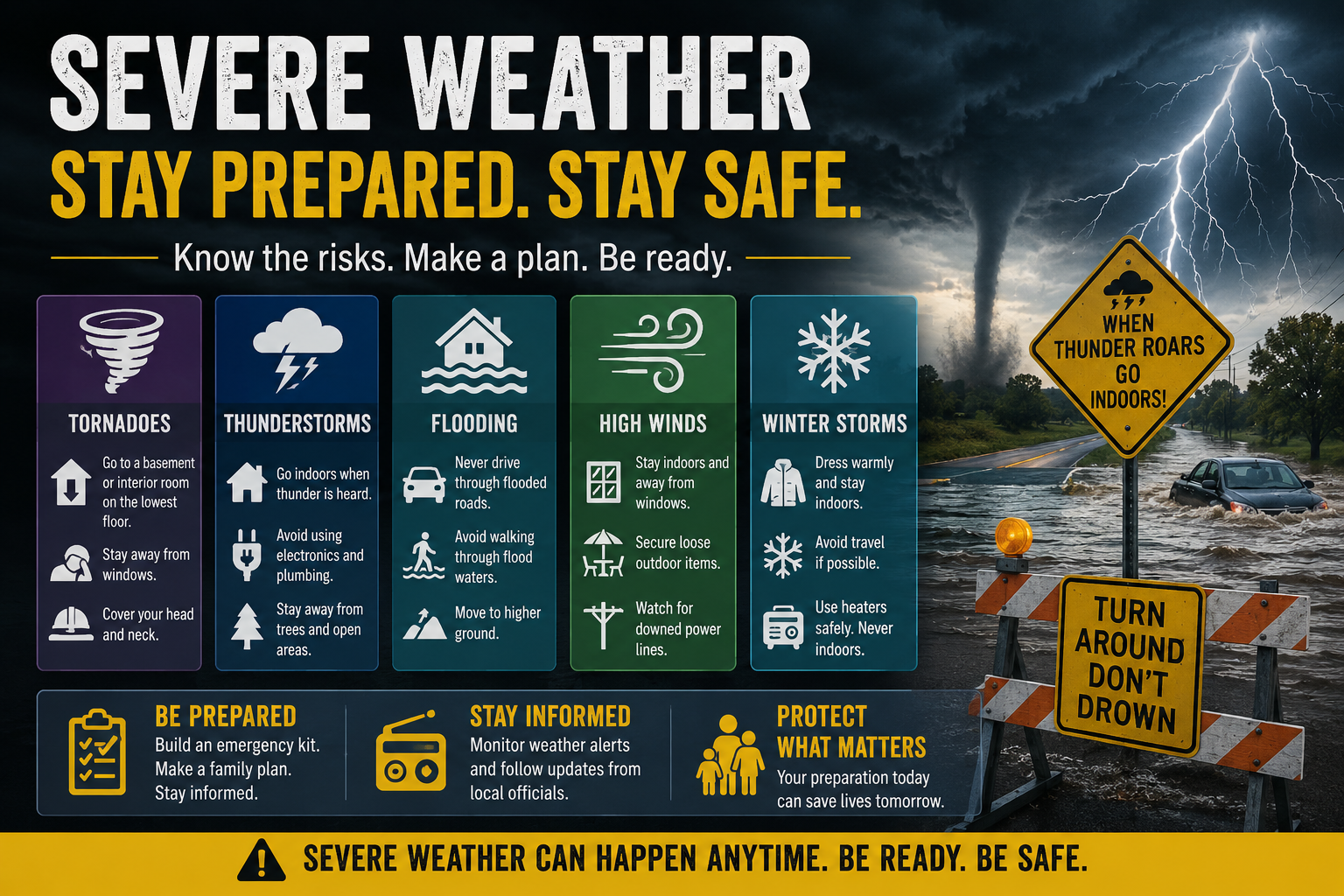
Severe Weather Safety Guide
Severe weather can develop quickly and become dangerous with little warning. Whether you are at home, driving, working, or outdoors, knowing how to prepare and react can help protect you and your family during storms, tornadoes, flooding, high winds, extreme heat, winter storms, and lightning.
Stay Informed
One of the most important steps during severe weather is staying aware of changing conditions.
- Monitor local weather forecasts regularly
- Enable emergency alerts on your phone
- Keep a battery-powered weather radio available
- Follow trusted local emergency management and weather agencies
- Do not ignore watches or warnings
Understanding Weather Alerts
- Watch: Conditions are favorable for severe weather. Stay alert and prepare.
- Warning: Severe weather is occurring or imminent. Take action immediately.
Build an Emergency Kit
Every household should have an emergency supply kit ready before severe weather strikes.
Recommended Items
- Bottled water
- Non-perishable food
- Flashlights
- Extra batteries
- First aid kit
- Prescription medications
- Phone chargers and backup power banks
- Blankets and extra clothing
- Important documents in waterproof containers
- Pet supplies if applicable
Tornado Safety
Tornadoes can form rapidly and may leave only minutes to seek shelter.
If You Are Indoors
- Move to a basement or storm shelter immediately
- If no basement is available, go to an interior room on the lowest floor
- Stay away from windows and exterior walls
- Cover your head and neck with blankets, pillows, or a helmet
If You Are Driving
- Do not try to outrun a tornado in heavy traffic
- Seek sturdy shelter immediately
- Avoid overpasses and bridges
- If no shelter is available, lie flat in a low ditch while protecting your head
Thunderstorm and Lightning Safety
Lightning can strike several miles away from a storm.
Stay Safe During Thunderstorms
- Move indoors as soon as thunder is heard
- Avoid using corded electronics and plumbing during lightning
- Stay away from windows
- Avoid open fields, tall trees, and metal objects outside
Remember:
When thunder roars, go indoors.
Flood Safety
Flooding is one of the most dangerous and deadly weather hazards.
Important Flood Safety Tips
- Never drive through flooded roads
- Just six inches of moving water can knock a person down
- One foot of water can carry away many vehicles
- Move to higher ground immediately if flooding develops
- Avoid walking through floodwaters
Turn Around, Don’t Drown
Many flood deaths occur in vehicles when drivers attempt to cross flooded roads.
High Wind Safety
Strong winds can damage buildings, knock down trees, and create flying debris.
- Stay indoors and away from windows
- Secure outdoor furniture and loose items before storms arrive
- Avoid wooded areas during high wind events
- Be cautious of downed power lines after storms
Winter Storm Safety
Snow, ice, and extreme cold can quickly create dangerous conditions.
Winter Preparedness
- Keep extra blankets and warm clothing available
- Avoid unnecessary travel during storms
- Keep vehicles fueled and stocked with emergency supplies
- Watch for signs of frostbite and hypothermia
If You Lose Power
- Use generators outdoors only
- Never use grills or gas stoves for indoor heating
- Dress in layers to conserve body heat
Extreme Heat Safety
Heat-related illnesses can become life-threatening quickly.
Protect Yourself During Extreme Heat
- Drink plenty of water
- Avoid strenuous outdoor activity during peak heat
- Wear light-colored, loose-fitting clothing
- Never leave children or pets in vehicles
- Check on elderly neighbors and vulnerable individuals
Prepare Before Severe Weather Strikes
Preparation saves lives. Create a family emergency plan that includes:
- Safe shelter locations
- Emergency contact information
- Meeting locations if separated
- Evacuation routes
- Plans for pets and livestock
Practice your plan regularly so everyone knows what to do during an emergency.
After the Storm
Even after severe weather passes, dangers can remain.
- Avoid downed power lines
- Watch for damaged structures
- Be cautious around floodwaters
- Follow instructions from emergency officials
- Document damage for insurance purposes if needed
Final Reminder
Severe weather can happen at any time of year. Staying prepared, informed, and calm during emergencies can make a major difference in protecting lives and property.Take warnings seriously, have a plan ready, and encourage your family and community to stay weather aware and prepared.